Aaron Wey MD, FAAOS, FACS · Adult and Pediatric Spine Surgery870 Palisade Ave, Teaneck, NJ · (201) 836-1663 · aaronweymd.com
Stretching printouts
Quadriceps Stretches for Children and Teens
Why the quadriceps
The quadriceps is the big muscle on the front of the thigh. It straightens the knee by pulling on the kneecap, which pulls on the tendon below it, which pulls on the bump at the top of the shin. Every jump, sprint, kick, and landing goes through that chain.
In a growing child, two spots on that chain are soft growth centers rather than hard bone: the bottom tip of the kneecap and the bump on the shin. When the thighbone grows faster than the muscle during a growth spurt, the quadriceps gets tight and pulls on those spots with every step. The result is Osgood-Schlatter disease at the shin bump, Sinding-Larsen-Johansson syndrome at the kneecap tip, and patellar tendonitis in older teens. A tight quadriceps also presses the kneecap harder into its groove, which causes the dull ache around the kneecap that many teenagers get. A loose quadriceps is the treatment for all of them.
A simple test: lying on the stomach, the heel should reach the buttock easily. If it stops well short, or the hip lifts off the floor, the quadriceps is tight.
How long and how often
- Hold each stretch for 20 seconds.
- Do 5 rounds on each side. That is 100 seconds per side, each session.
- Twice a day: once in the morning or before practice, after a few minutes of warm-up, and once in the evening.
- A pull in the front of the thigh is right. Pain at the kneecap means the pull is too hard; ease off.
- Keep it up for at least six weeks, and keep it as a habit through the growth years.
The stretches
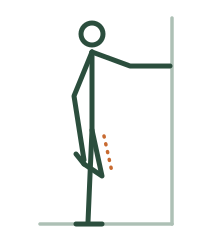
1. Standing. Stand tall with one hand on a wall or a chair. Bend one knee and hold that foot or ankle behind you with the hand on the same side. Keep the knees together and push the hips forward slightly; do not let the knee drift out to the side or the back arch. Hold 20 seconds. Switch legs. Repeat for 5 rounds each. If the foot is hard to reach, loop a towel or a strap around the ankle.
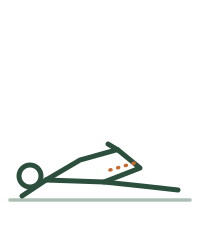
2. Side-lying. Lie on your side with the leg to be stretched on top. Bend the top knee and hold the foot, pulling the heel toward the buttock while pushing the hip forward. Keep the knees together and the body in a straight line. This version is easier to control and is the one I suggest for younger children and anyone who finds balance hard.
3. Kneeling (older teens). Kneel on one knee on a cushion with the other foot in front. Hold the back foot and draw it toward the buttock while keeping the body upright and the pelvis tucked. This stretches the quadriceps and the hip flexor together.
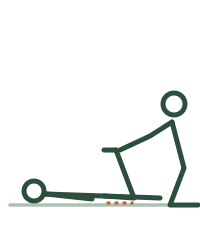
4. For a small child, with a parent's help. Have your child lie on their stomach. Rest one hand on the low back to keep the hip down, and with the other hand bend the knee slowly, bringing the heel toward the buttock until the child feels a pull in the front of the thigh. Hold 20 seconds, release, and repeat. Never push through pain, and never bounce. If the hip lifts, you have gone too far.
Tips
- Knees together in every version. If the bent knee swings out to the side, the stretch is lost.
- Stand tall and keep the pelvis tucked. Arching the back is the most common mistake and it takes the stretch off the thigh.
- Warm muscles stretch better: after a bath, after practice, or after a few minutes of walking.
- A child with kneecap pain usually needs the hamstring and calf stretches too.
When to call
Call if the pain is sharp at the kneecap or the shin bump, if there is a lot of swelling, if your child cannot straighten the knee or lift the leg straight, if the pain followed a single injury or a pop, or if things are not improving after six weeks of twice-daily stretching.
Learn more
My guides to anterior knee pain in teens, Osgood-Schlatter disease, Sinding-Larsen-Johansson syndrome, and the calf, hamstring, hip flexor, and IT band printouts.
OrthoInfo (AAOS), Osgood-Schlatter Disease: orthoinfo.aaos.org (opens in a new tab)
More for families
OrthoKids · POSNA
POSNA's OrthoKids: illustrated, family-friendly information on this condition.
Open on OrthoKids (opens in a new tab)This printout is general guidance for Dr. Wey's patients and their families and does not replace the advice we discuss in clinic. A stretch should pull, not hurt. Stop and call us if a stretch causes sharp pain at the knee or hip.