Aaron Wey MD, FAAOS, FACS · Adult and Pediatric Spine Surgery870 Palisade Ave, Teaneck, NJ · (201) 836-1663 · aaronweymd.com
Stretching printouts
IT Band Stretches and Foam Rolling for Children and Teens
Why the IT band
The iliotibial band is a long, thick strap of tissue that runs down the outside of the thigh from the hip to just below the knee. It is not a muscle; it is more like a tendon for two muscles at the top of the hip, the tensor fasciae latae and the gluteus maximus, which pull on it. When those muscles are tight or working too hard, the band is pulled taut and rubs over the bony bump on the outside of the knee with every step, or over the bump on the outside of the hip. That rubbing causes the sharp pain on the outside of the knee in runners and cyclists, the snapping at the hip in dancers, and it pulls the kneecap outward, which adds to kneecap pain and instability.
The band itself barely stretches; it is too thick. What the stretches and the roller do is loosen the muscles that pull on it and the tissue around it, which takes the tension off. Stronger hip muscles are the other half of the fix, and your therapist will add those.
How long and how often
- Stretches: hold 20 to 30 seconds, 3 to 5 rounds on each side, once or twice a day.
- Foam rolling: 1 to 2 minutes on each side, once a day, before the stretches.
- A pull along the outside of the hip and thigh is right for the stretch. The roller is uncomfortable for most people at first; that is normal, but it should ease over a week or two, and it should never be sharp.
- Keep it up for six weeks, and keep it as a habit through the running season.
The stretches and the roller
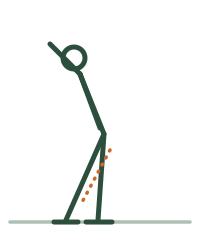
1. Standing cross-over stretch. Stand tall next to a wall for balance, with the side to be stretched away from the wall. Cross that leg behind the other one, so the feet are crossed. Push the hip of the crossed leg out to the side, and lean the upper body away from it, reaching the arm on that side up and over. You should feel the pull along the outside of the hip and thigh. Hold. Switch sides.
2. Lying cross-over stretch. Lie on your back with both legs straight. Bring one leg across the body, keeping it straight, and let it drop toward the floor on the opposite side while the shoulders stay flat. Hold. Switch sides. Gentler than the standing version, and good before bed.
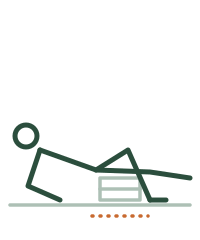
3. Foam rolling: like a rolling pin making pasta. Lie on your side with the foam roller under the outside of the thigh, just below the hip, propped on the forearm, with the top leg bent and its foot flat on the floor in front for support. Now roll slowly from the hip down to just above the knee and back, as if the roller is a rolling pin and the outer thigh is the dough: slow, even passes, flattening it out, over the whole length. When you find a tender spot, pause on it for 10 to 20 seconds and let it soften before moving on. Do not roll directly over the bony bump at the knee or the hip. One to two minutes, then switch sides.
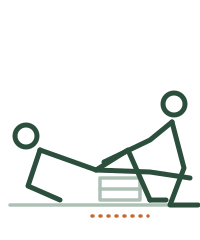
4. For a small child, with a parent's help. Younger children do not usually need the roller, and the stretches above are enough. If a therapist has asked for it, have your child lie on the roller as above while you kneel beside them, with one hand on the hip to steady them and keep the rolling slow and even. Make it a game: count the passes, and stop at the first sign of real discomfort. For the stretch, help your child stand with the legs crossed and hold their hands while they lean away.
Tips
- Roll before you stretch; a looser muscle stretches better.
- Breathe. Holding the breath tightens everything.
- A firm foam roller about 6 inches across is right for most teens; a softer one for a smaller child.
- Pair this with the hip flexor and quadriceps stretches, since the muscles overlap.
- The tightness usually comes from weak hip muscles. Clamshells and side-lying leg raises, 2 sets of 15 each side, three times a week, keep it from coming back.
When to call
Call if there is sharp pain or swelling at the outside of the knee or hip, if the knee catches or locks, if your child limps, or if the pain is not improving after six weeks of daily rolling and stretching.
Learn more
My guides to lateral patellar instability, the home program for patellar instability, and the calf, hamstring, quadriceps, and hip flexor printouts.
More for families
OrthoKids · POSNA
POSNA's OrthoKids: illustrated, family-friendly information on this condition.
Open on OrthoKids (opens in a new tab)This printout is general guidance for Dr. Wey's patients and their families and does not replace the advice we discuss in clinic. A stretch should pull, not hurt, and foam rolling should be uncomfortable at most. Stop and call us if there is sharp pain at the outside of the knee or hip.