Aaron Wey MD, FAAOS, FACS · Adult and Pediatric Spine Surgery870 Palisade Ave, Teaneck, NJ · (201) 836-1663 · aaronweymd.com
Stretching printouts
Calf Stretches for Children and Teens
Why the calves
The calf has two muscles. The big one you can see, the gastrocnemius, starts above the knee and runs down into the Achilles tendon. Underneath it is the soleus, which starts below the knee and joins the same tendon. Together they push the foot down and power every step, jump, and sprint.
During a growth spurt the shin bone lengthens faster than the calf can keep up, so the calf gets tight. A tight calf pulls hard on the heel bone, where its growth center is (Sever's disease), and makes the foot flatten and the knee turn in with every step, which adds to knee pain, shin splints, ankle sprains, and toe walking. Stretching the calf, every day, is the fix for most of these, and it only works if it is done consistently.
Because the two muscles start in different places, each needs its own stretch: the gastrocnemius with the knee straight, the soleus with the knee bent. Do both.
How long and how often
- Hold each stretch for 20 to 30 seconds.
- Do 3 to 5 rounds on each side.
- Once or twice a day, every day. Once in the evening is the easiest habit; before practice, after a few minutes of warm-up, is the second.
- A steady pull in the calf is right. Do not bounce, and do not push into pain.
- Keep going for at least six weeks, then keep it as a habit through the growth years.
The stretches
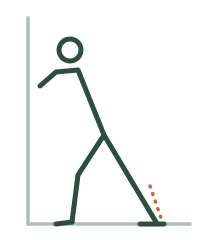
1. Wall stretch, knee straight (gastrocnemius). Stand facing a wall with both hands on it. Step the leg to be stretched back, toes pointing straight at the wall, and keep that knee straight and the heel flat on the floor. Bend the front knee and lean toward the wall until you feel a pull in the upper calf of the back leg. Hold. Switch legs.
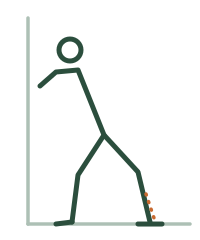
2. Wall stretch, knee bent (soleus). Same position, but bend the back knee a little while keeping the heel down. The pull moves lower, toward the Achilles tendon. Hold. Switch legs.
3. Step stretch (older children and teens). Stand on the edge of a step with the ball of the foot on the step and the heel hanging off, holding a rail. Let the heel drop below the step until you feel the pull. Do it with the knee straight, then with the knee slightly bent.
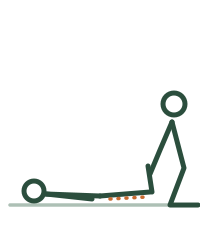
4. For a small child, with a parent's help. Have your child lie on their back. Hold the heel in one hand with the knee straight, and with the other hand gently push the sole of the foot toward the shin until the calf feels tight. Hold 20 to 30 seconds. Let go, and repeat. Then do it with the knee bent a little. Talk, count, or sing through the hold; it goes faster for everyone.
Tips
- Toes point straight ahead in every stretch. If they turn out, the stretch goes into the ankle instead of the calf.
- Keep the heel down. If it lifts, step the foot closer to the wall.
- Warm muscles stretch better: after a bath, after practice, or after a few minutes of walking.
- A night splint that holds the foot up during sleep is sometimes added for a child with very tight calves or heel pain; I will tell you if it is needed.
When to call
Call if your child limps, has pain at rest or at night, has swelling or redness at the heel or calf, walks on the toes and cannot get the heels down, or is not improving after six weeks of daily stretching.
Learn more
My guides to Sever's disease, toe walking, and the hamstring, quadriceps, hip flexor, and IT band printouts.
OrthoInfo (AAOS), Sever's Disease: orthoinfo.aaos.org (opens in a new tab)
More for families
OrthoKids · POSNA
POSNA's OrthoKids: illustrated, family-friendly information on this condition.
Open on OrthoKids (opens in a new tab)This printout is general guidance for Dr. Wey's patients and their families and does not replace the advice we discuss in clinic. A stretch should pull, not hurt. Stop and call us if a stretch causes sharp pain, or if your child is limping or has pain at rest.