Aaron Wey MD, FAAOS, FACS · Adult and Pediatric Spine Surgery870 Palisade Ave, Teaneck, NJ · (201) 836-1663 · aaronweymd.com
Stretching printouts
Hamstring Stretches for Children and Teens
Why the hamstrings
The hamstrings are the three muscles down the back of the thigh. They start at the sit bone at the bottom of the pelvis and run down behind the knee. When they are tight, they pull the pelvis backward and down, which flattens the low back and makes the child walk with stiff knees and a short stride, and they tug on their attachments at the pelvis and behind the knee.
Tight hamstrings are part of almost every low back problem I see in young athletes, including spondylolysis and spondylolisthesis, and they add to knee pain and hamstring strains in runners and soccer players. During a growth spurt the thighbone grows faster than the muscle, so nearly every teenager goes through a tight period. A simple test: lying on the back with one leg flat, the other leg should lift, straight, to about 70 or 80 degrees. Many teens cannot get past 45.
How long and how often
- Hold each stretch for 20 to 30 seconds.
- Do 3 to 5 rounds on each side.
- Once or twice a day, every day. For a child with a back problem, twice.
- A pull in the back of the thigh is right. A pull behind the knee means the knee is being pushed back too hard; soften it slightly. Any tingling or pain down the leg means stop.
- Keep the back flat in every version. A rounded back does not stretch the hamstrings; it stretches the back.
The stretches
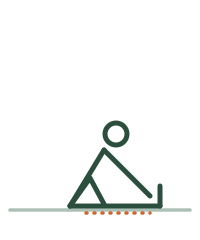
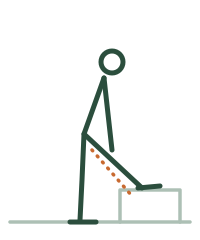
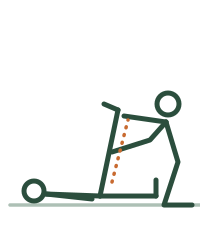
1. Lying down with a strap (the best one). Lie on your back with one leg flat. Loop a belt, towel, or strap around the other foot and raise that leg, keeping the knee straight, until you feel the pull behind the thigh. The low back stays flat on the floor. Hold. Lower and switch legs. This is the version I want for any child with a back problem, because the back cannot round.
2. Seated. Sit on the floor with one leg straight and the other bent with the foot against the inner thigh. Sit tall, then lean forward from the hips toward the straight leg with a flat back, reaching toward the toes. Keep the chin up and the back long. Hold. Switch legs.
3. Standing with the heel on a step. Put one heel on a low step or a stair, knee straight, toes up. Stand tall, then hinge forward from the hips with a flat back until you feel the pull. Hands on the thigh. Hold. Switch legs.
4. For a small child, with a parent's help. Have your child lie on their back. Hold one leg straight, with one hand above the knee to keep it straight and the other at the heel, and lift the leg slowly toward the ceiling until you feel resistance and your child says it pulls. The other leg stays flat on the floor. Hold 20 to 30 seconds, lower, and repeat. Never push through pain.
Tips
- Toes pointed up toward the ceiling, not out to the side.
- Hinge from the hips, not the waist. Imagine a straight line from the head to the tailbone.
- Warm muscles stretch better: after a bath, after practice, or after a few minutes of walking.
- For a teenager with a stiff low back, pair this with the hip flexor stretches; the two work together.
- Avoid the standing toe-touch with both legs straight: it rounds the back more than it stretches the hamstrings.
When to call
Call if a stretch causes pain, numbness, or tingling down the leg, if your child has back pain with the stretch, has pain at the sit bone after a sprint or a split (which can be a small avulsion fracture), or is not improving after six weeks of daily stretching.
Learn more
My guides to spondylolysis, the home exercise program for spondylolysis and spondylolisthesis, pelvic avulsion fracture, and the calf, quadriceps, hip flexor, and IT band printouts.
More for families
OrthoKids · POSNA
POSNA's OrthoKids: illustrated, family-friendly information on this condition.
Open on OrthoKids (opens in a new tab)This printout is general guidance for Dr. Wey's patients and their families and does not replace the advice we discuss in clinic. A stretch should pull, not hurt. Stop and call us if a stretch causes sharp pain, or any pain, numbness, or tingling down the leg.