Aaron Wey MD, FAAOS, FACS · Adult and Pediatric Spine Surgery870 Palisade Ave, Teaneck, NJ · (201) 836-1663 · aaronweymd.com
Stretching printouts
Hip Flexor Stretches for Children and Teens
Why the hip flexors
The hip flexors are the muscles that lift the knee toward the chest. The main one, the iliopsoas, starts on the front of the low back and the inside of the pelvis and runs down to the top of the thighbone. Because it starts on the spine, a tight hip flexor does more than stiffen the hip: it tips the pelvis forward and pulls the low back into an arch every time the child stands, runs, or lands.
That arch is the problem. It loads the small joints at the back of the spine, which is how spondylolysis starts in young athletes, and it makes any low back pain worse. Sitting all day at school shortens the hip flexors; sports that lift the knee hard, like sprinting, soccer, and dance, make them tight and strong at the same time. Nearly every teenager with low back pain has tight hip flexors, and nearly every teenager who sits for school does too.
A simple test: lying on the back on the edge of a bed, hug one knee to the chest. The other thigh should stay flat on the bed. If it lifts, the hip flexor on that side is tight.
How long and how often
- Hold each stretch for 20 to 30 seconds.
- Do 3 to 5 rounds on each side.
- Once or twice a day, every day. For a child with a back problem, twice.
- A pull in the front of the hip and the top of the thigh is right. Pain in the back means the pelvis is not tucked; reset and tuck first.
- Pair it with the hamstring stretches; the two together balance the pelvis.
The stretches
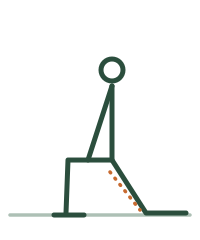
1. Half-kneeling (the main one). Kneel on one knee on a cushion with the other foot flat on the floor in front, both knees at right angles. Stand tall. First tuck the pelvis under, as if pulling the tailbone down and the belt buckle up, and squeeze the buttock of the kneeling side. Then shift the whole body forward a few inches, keeping it upright, until you feel a pull in the front of the kneeling hip. Hold. Switch sides. The tuck is the whole exercise: without it, shifting forward just arches the back.
2. Half-kneeling with a reach (older teens). Same position, and raise the arm on the kneeling side straight overhead, leaning slightly away. The pull moves higher, into the front of the hip and the side of the trunk.
3. Lying at the edge of a bed. Lie on your back with the buttocks at the very edge of the bed. Hug one knee to the chest and let the other leg hang down off the edge, relaxed, with the knee bent. The weight of the leg does the stretch. Hold. Switch sides.
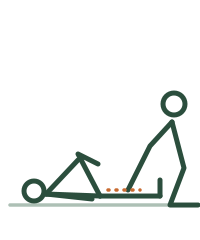
4. For a small child, with a parent's help. Have your child lie on their back on the floor or a bed. Ask them to hug one knee to the chest with both arms. With your hand, gently hold the other thigh down flat, just above the knee, so it does not lift. Hold 20 to 30 seconds, release, and switch. Keep it gentle; the thigh only needs to stay down, not be pushed.
Tips
- Tuck first, then shift. Every time.
- Keep the body upright; leaning forward from the waist takes the stretch away.
- A cushion or a folded towel under the kneeling knee makes it comfortable enough to hold.
- Warm muscles stretch better: after a bath, after practice, or after a few minutes of walking.
- Get up from sitting at school and at home every 30 to 45 minutes. A short walk undoes a lot of tightness.
When to call
Call if the stretch causes sharp pain in the groin or the front of the hip, if your child limps or has hip pain with walking, if there is pain at the front of the pelvis after a sprint or a kick (which can be a small avulsion fracture), or if back pain is not improving after six weeks of daily stretching.
Learn more
My guides to spondylolysis, the home exercise program for spondylolysis and spondylolisthesis, pelvic avulsion fracture, and the calf, hamstring, quadriceps, and IT band printouts.
More for families
OrthoKids · POSNA
POSNA's OrthoKids: illustrated, family-friendly information on this condition.
Open on OrthoKids (opens in a new tab)This printout is general guidance for Dr. Wey's patients and their families and does not replace the advice we discuss in clinic. A stretch should pull, not hurt. Stop and call us if a stretch causes sharp pain in the hip, groin, or back.